Ultradot
In the Field: Hunting with the Matchdot II
Apr
In the Field: Hunting with the Matchdot II
There’s a difference between range performance and real-world performance.
Recently, Joe Sandrini of Handgun Hunting Afield put the Matchdot II to work in the kind of situation that matters most; out in the field, with no time to think twice.
While glassing for mule deer, Joe spotted a buck moving in fast. What followed was a moment every hunter recognizes. The kind where everything speeds up and slows down at the same time.
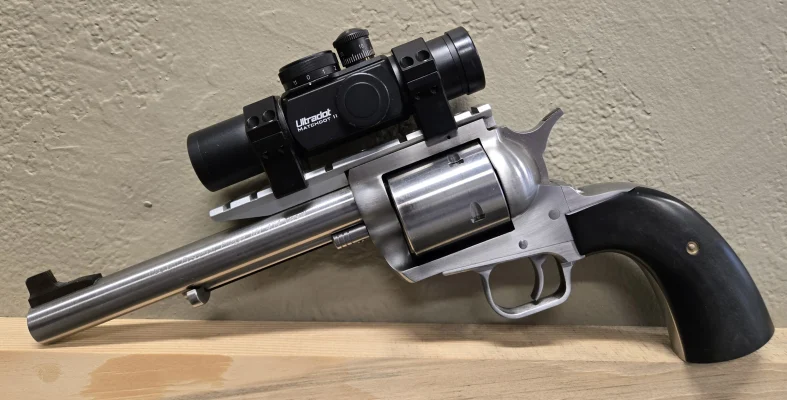
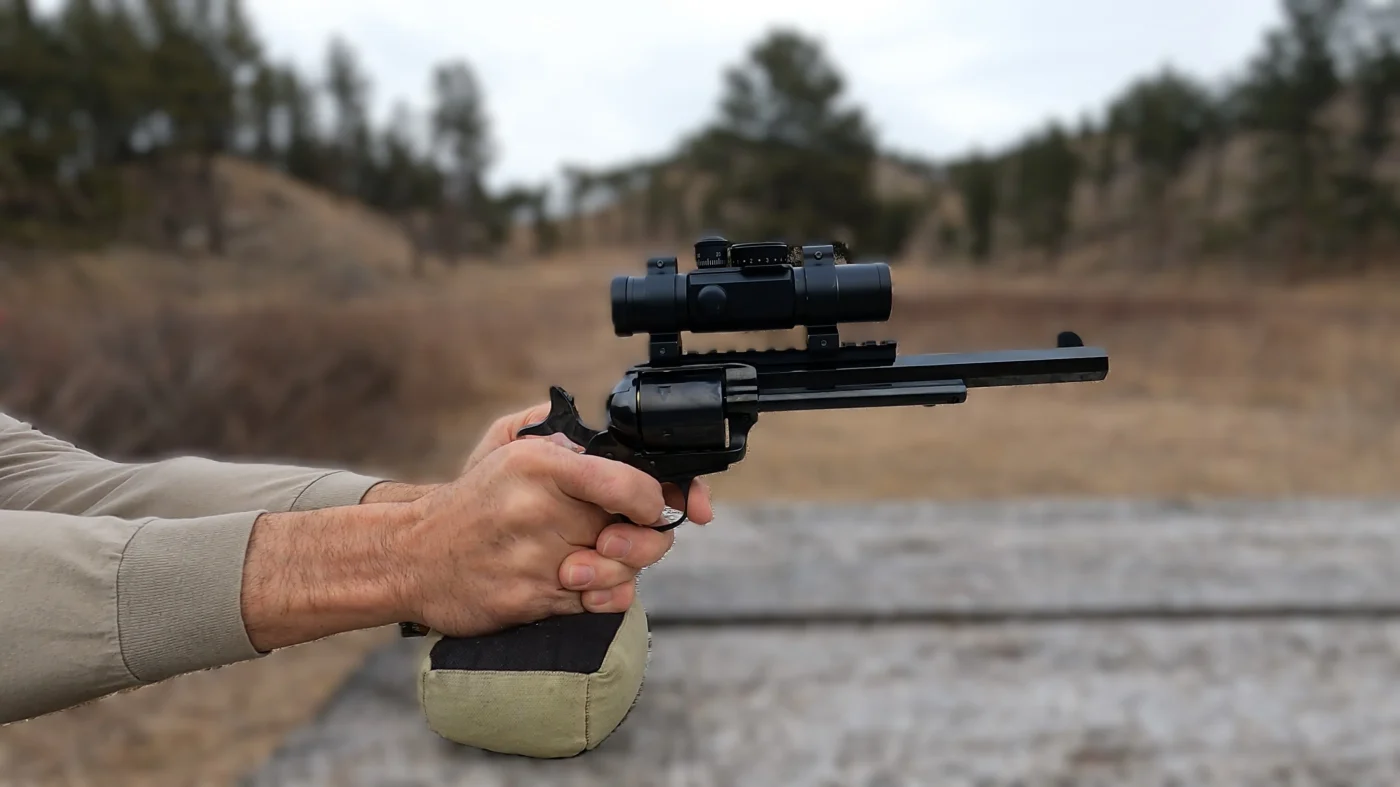
At 78 yards and closing, he made the call to go with his revolver, topped with a Matchdot II.
As the buck shifted direction and prepared to bolt, Joe settled in, took a firm two-handed grip, and placed a 4 MOA dot on the shoulder.
One shot. Clean result.
________________________________________
Why the Matchdot II Works in the Field
Joe’s experience highlights something we hear often from handgun hunters: the importance of speed and clarity.
With a red dot:
• Target acquisition is faster
• There are fewer focal points to manage
• The aiming point stands out clearly, even against dark backgrounds
In his words, the Matchdot II proved especially effective “when a quicker shot was required.”
That’s exactly the scenario where a red dot earns its place.
________________________________________
Built for Real Use
Over time, Joe has used the same revolver and Matchdot II setup to take multiple big game animals, including elk and antelope.
Across those hunts, one thing remained consistent:
the optic held up under recoil and maintained performance when it mattered.
That kind of consistency isn’t something you see on a spec sheet. It shows up in the field.
________________________________________
A Note on Setup
Joe also pointed out something worth sharing.
Under heavy recoil, he found that upgrading to higher-quality rings helped prevent movement of the optic.
That’s a good reminder that in high-recoil applications, your mounting setup matters just as much as the optic itself.
________________________________________
Choosing the Right Dot
Joe tested both red and green versions of the Matchdot II and found that, due to his astigmatism, the red dot gave him a clearer aiming point.
This is something we always recommend: if you have the chance, try both.
For some shooters, green will appear sharper. For others, red is the better choice.
________________________________________
Final Thoughts
At the end of the day, the Matchdot II isn’t just about features—it’s about performance when the shot counts.
Whether it’s low light, moving game, or a narrow window of opportunity, a clear aiming point and fast acquisition can make all the difference.
Joe’s experience is a great example of what that looks like in the real world.
________________________________________
Read the full article here: